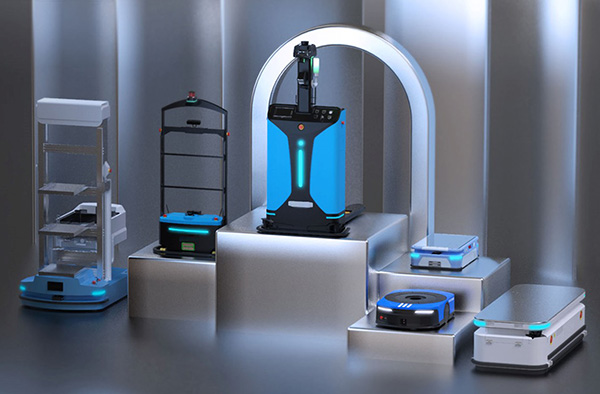
This is where the intelligent forklift comes into the picture. Designed to combine automation, smart navigation, and real-time decision-making, these machines are reshaping how materials are moved and stored.
However, choosing the right intelligent forklift is not as simple as picking the most advanced model on the market. Different operations require different levels of automation, load capacity, navigation accuracy, and integration with existing systems. A forklift that performs perfectly in one warehouse may be completely unsuitable in another.
This article breaks down the most important factors you should consider before investing in an intelligent forklift, helping you make a decision that is practical, cost-effective, and future-ready.
Understand Your Operational Needs First
You need to step back and look at your operation before checking the specifications or advanced features. The most intelligent forklift is one which suits your workflow and not the one with the longest feature list.
Take into account the dimensions of the facility, aisle width, ceiling height, and floor condition. When your warehouse deals with lightweight products, and vertical movement is frequent, then the idea of pallet stackers might not be a new concept to your business, and the move to a smart one might be a relatively easy one.
Also, consider the predictable nature of your workflows. Automation is more relevant in highly structured settings, whereas layouts that are constantly changing might need more flexible systems.
Decide the Level of Automation You Actually Need
Every business does not require complete autonomy at its inception. Certain operations may be better served by semi-autonomous but others by autonomous machines.
A good compromise is a stacker smart forklift. It has automated lifting, positioning and navigation with human supervision available when necessary. Such a forklift is suitable when the company is first venturing into the area of automation without fully transforming their operations.
On the other end, an autonomous forklift robot is able to perform repeated transport and stacking jobs with minimum human intervention. These systems suit high volume operations where consistency and speed are of high importance.
Navigation Technology Matters More Than You Think
The navigation of the environment is one of the most significant characteristics of an intelligent forklift. The accuracy of navigation has a direct impact on the safety, efficiency, and overall performance directly.
A laser SLAM forklift utilizes sensors and laser mapping to be aware of its environment in real time. Laser SLAM also enables the forklift to learn new layouts without much reconfiguration unlike the system that uses fixed markers or magnetic strips. This flexibility is particularly useful in dynamic warehouses.
Likewise, a SLAM autonomous pallet truck would be developed to autonomously travel with pallets and constantly map around its surroundings. These systems minimize the time to set up and have the ability to scale operations without significant changes to infrastructure.
When evaluating navigation systems, look for reliability, adaptability, and the ability to handle obstacles and mixed traffic.
Load Capacity and Lifting Requirements
The smartest forklift has to fulfill at least some rudimentary mechanical needs. Load capacity, lifting height, and stability are still the basic factors.
A stacking forklift should be in a position to raise loads to the needed height without losing balance or accuracy. Smart control systems can be used to maximize the lifting speed and positioning, but lack of mechanical strength cannot be compensated.
In the event that your operation requires more frequent pallet handling at lower height, you may find better use of advanced pallet stackers with intelligent control systems rather than larger forklifts.
It is always advisable to use a forklift with higher load capacity than you require so that you do not use the maximum capacity.
Safety Systems and Human Interaction
One of the most significant benefits of intelligent forklifts is safety, although they should be designed and deployed properly.
An intelligent forklift should have obstacle detection, emergency stop, speed control in high-traffic zones, and visual/audible alerts. These are critical in conditions where machines and humans coexist.
A self-driving forklift robot must have the capability to reduce its speed or re-navigate itself in case of any unforeseen obstacles. Advanced ones are even able to indicate motion patterns and modify their direction to minimize the risk of collisions.
The safety certifications and adherence to local regulations also must never be ignored when one is making a purchase decision.
Integration With Existing Systems
Automation is most appropriate where all systems interact well. A smart forklift must be easy to integrate with your warehouse management, inventory programs and production planning software.
To illustrate, a SLAM autonomous pallet truck with the ability to get real-time task allocation of your management system will enhance the efficiency of the workflow considerably. Without proper integration ,even the most sophisticated forklift is an isolated device instead of a component of an intelligent operation.
Seek information with the suppliers on compatibility of software, possibility of sharing data, and constant upgrade possibilities before committing into a particular model.
Maintenance and Technical Support
Modern technology comes with modern-day maintenance demands. Before making a purchase, get to know what support is provided by the manufacturer.
A laser SLAM forklift heavily depends on software, cameras, and sensors. Therefore, long-term performance will need calibration, software updates, and technical support. Bad support can easily offset the gains of automation.
Select suppliers that provide training, availability of local services and maintenance schedule. An intelligent forklift with proper support will provide a steady value throughout the years.
Cost Versus Long-Term Value
Although smart forklifts may cost more initially, purchase price is not the only way to look at it. Long term value entails lower labor expenses, less error, enhanced safety and increased throughput.
A self-driven forklift robot might not be cheap at first, but when replacing several manual processes and running without many breaks, the payback period may be significant.
Consider overall ownership cost, such as maintenance, power usage, training and upgrades of the systems and not merely the original cost.
Final Thoughts
Choosing the right intelligent forklift is a strategic decision that affects productivity, safety, and scalability. Whether you are upgrading existing pallet stackers, introducing a laser SLAM forklift, or investing in a full autonomous forklift robot, the key is alignment with your operational goals.
By focusing on real needs rather than marketing hype, understanding navigation technology, prioritizing safety, and planning for the future, you can select a solution that delivers lasting value.
A well-chosen intelligent forklift is not just a machine, but a long-term partner in building a smarter, more efficient operation.